
For most shops, offices and cafés, the power bill is driven by two things: cooling and lighting.
The Government's small business energy guide, which draws on the national energy.gov.au advice, says heating and cooling can be as much as 50% of a business's energy use and lighting up to 40%. Those are the places to start.
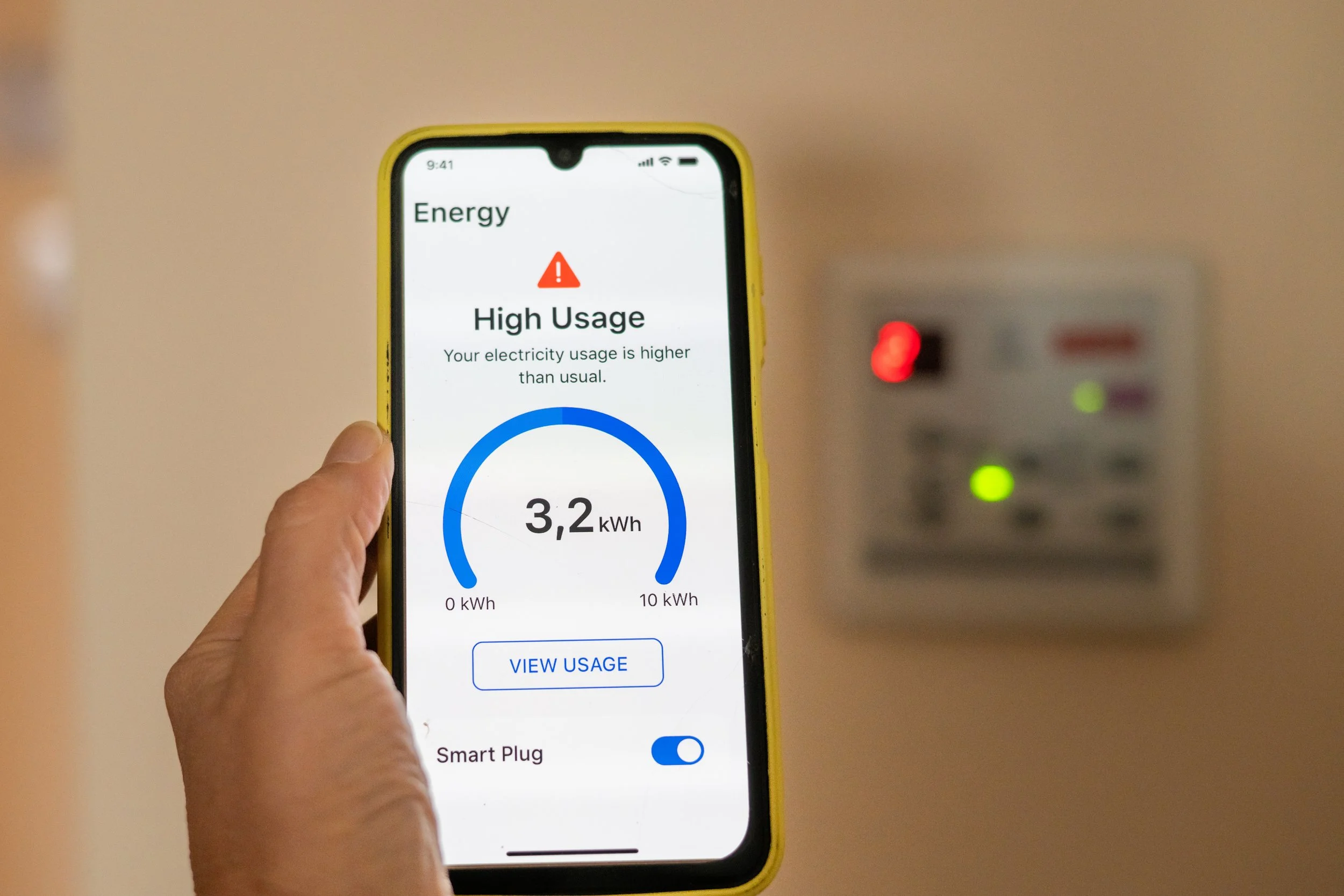
Energy saving tips for small businesses, from an electrician's side of the counter
These energy saving tips for small businesses are the electrical ones: the changes that need a sparky or a tariff change rather than a new staff policy. Each one notes the kind of site it suits.
1. Get control of the air con
Suits: Offices, retail, clinics, hospitality
The common energy-guzzling culprits are systems that still run after close, cooling the whole floor when one room is in use, and set points pushed too far.
The WA guide says shifting the thermostat by one degree can cut energy use by 10%. Scheduling and zoning controls deal with all three, and hardwired controllers need an electrician.
2. Move to LED lighting
Suits: Any site with long trading hours
Long lighting hours make LEDs pay back faster than they do at home. Energy.gov.au puts LED energy use at about 75% below halogen. NSW's Energy Savings Scheme has changed here: the method that funded commercial LED upgrades at around 40,000 sites closed on 1 April 2026, though eligible small and medium businesses can still get discounted upgrades under the remaining pathway. Our LED savings post shows how to work out the per-fitting saving.
3. Put sensors on back-of-house lighting
Suits: Storerooms, toilets, corridors, car parks
Lights left burning in rooms nobody visits are pure waste. Occupancy sensors and timers switch them off automatically. They're wired in at the switch, so it's licensed work.
4. Check your power factor
Suits: Workshops, kitchens, cool rooms, sites with lots of motors
Power factor is the ratio of real power (kW) to apparent power (kVA). Ausgrid says a low power factor can mean paying a higher capacity charge than you need to, and that the NSW Service and Installation Rules require users to maintain at least 0.9.
If your bill shows a kVA demand charge, a power factor assessment is worth doing. Correction equipment is usually a capacitor bank fitted at the main board.
5. Shift flexible loads out of peak
Suits: Businesses with EV fleets, battery-powered tools, electric hot water or batch processes
On Ausgrid's time-of-use network tariff, small businesses pay peak from 3pm to 9pm on working weekdays in summer (November to March) and winter (June to August). Charging, heating and anything else that can wait should run outside that window.
Note that the new Solar Sharer free-power offer is for households only, so it won't apply to your business account.
6. Sub-meter the switchboard
Suits: Sites where the bill doesn't match what you think is running
Sub-meters show which circuits draw what, and when. That's usually how you find the compressor short-cycling overnight or the display fridge nobody turns off. We install monitoring that reports by circuit, so the data comes to your phone.
7. Upgrade an old switchboard
Suits: Older premises, fit-outs adding new loads
This is the enabler for most of the above. A board with ceramic fuses, frequent tripping, no spare positions or any sign of heat or buzzing needs attention before you add controls, sub-meters or EV charging. Our switchboard upgrade guide explains what's involved.
Read your bill before you spend anything
A business bill tells you more than a household one. Look for the tariff name, any demand charge, and the unit it's measured in, kW or kVA. A kVA demand charge points straight at power factor.
A big gap between peak and off-peak usage points at load shifting. If there's no interval data on the bill, your retailer can usually send it on request, and that half-hourly data is the best starting point for any walkthrough.
Where commercial power bill savings usually come from first
On most small Sydney sites, the order we'd tackle things in is:
Air con scheduling and set points
LED lighting with sensors
Power factor, if you're on a kVA demand tariff
The first two cover the biggest slices of a typical business bill. Commercial power bill savings from the rest depend more on the individual site, which is where sub-metering earns its place.
Help with the cost
Small business energy efficiency upgrades can come with upfront discounts. NSW's Energy Savings Scheme and Peak Demand Reduction Scheme offer discounts on eligible upgrades for households and small businesses, applied by accredited installers in your quote.
Inner West businesses can also get free, independent advice through the council's program with ZapCat, which covers solar, batteries, heat pumps and EV chargers.
Talk to an electrician who does commercial work
We work with cafés, retailers, offices and food manufacturers across Sydney's Inner West, and we'll tell you which changes pay and which don't.
If you're looking to reduce business electricity bill Sydney costs at your site, see our commercial electrical services or the full list of electrical services, or call 1300 830 260.
Frequently Asked Questions
How much can a small business save on power?
It varies too much by site to give a fair single number. Bring 12 months of bills to a walkthrough and we can show where the load sits and which changes suit it.
Are there rebates for business energy efficiency in NSW?
Yes. The Energy Savings Scheme is a NSW Government scheme, not a federal one, and alongside the Peak Demand Reduction Scheme it gives upfront discounts on eligible upgrades through accredited providers.
Can I get the Solar Sharer Offer for my shop?
No. It's only available to residential customers with a smart meter.
What should I ask an electrician on a site walkthrough?
A short list to start with:
Which circuits use the most power, and when?
Is my power factor costing me on demand charges?
What does my switchboard need before I add EV charging or sub-metering?
Which upgrades qualify for NSW scheme discounts?
Can a commercial LED retrofit be done out of hours?
Usually, yes. Most fit-outs can be scheduled before opening or after close to keep the doors open during trading.
Should we add EV charging at the same time?
If you're already upgrading the board or adding monitoring, it's often sensible to plan the EV circuit at the same time so the capacity is there.